Kubernetes Architecture for Scalable Cloud Systems
Kubernetes Architecture shows how modern apps run, scale, and stay safe in the cloud. Today’s systems use microservices, automation, and CI/CD. Because of this, a strong platform design is now a business need.
At the same time, teams need fast releases and steady uptime. Therefore, learning how Kubernetes works helps DevOps and cloud teams avoid risk. It also helps them ship better software.
Major providers such as Google, AWS, and Azure use this same model. It is proven and stable. For example, the official Kubernetes docs explain how its control plane and nodes keep clusters running.
How the Kubernetes Platform Is Structured
A Kubernetes system runs inside a cluster. A cluster is a group of machines. Some manage the platform. Others run the apps.
This split keeps the system strong. If one part fails, the rest keeps working.
A typical setup has:
- Control plane parts
- Worker nodes
- Network and storage layers
Together, they form a self-healing system.
Kubernetes Architecture and the Control Plane
The control plane runs the whole cluster. It decides what runs, where it runs, and when it restarts.
API Server in Kubernetes Architecture
The API server is the main entry point. All tools send requests through it.
It also checks each request for rules and safety.
Because of this, the platform stays in sync.
etcd Data Store
etcd saves all cluster data. It holds pod info, network rules, and secrets.
As a result, the system can recover after a failure.
This store is fast and reliable.
Controller Manager
Controllers watch the cluster. They fix issues when they appear.
For example, if a pod stops, a new one starts.
So, apps stay online.
Scheduler Role in Kubernetes Architecture
The scheduler picks where new pods run. It checks CPU and memory.
Then, it sends the pod to the best node.
This keeps the load balanced.
Cloud Controller
This part links the platform with cloud tools. It connects to load balancers and storage.
It works across AWS, Azure, and Google Cloud.
So, teams can switch clouds with ease.
Node-Level Kubernetes Architecture
Worker nodes run the apps. Each node has tools that keep containers running.
Kubelet Agent
The kubelet runs on each node. It gets tasks from the control plane.
Then, it starts and checks containers.
It also sends health data back.
Kube-Proxy Networking
Kube-proxy manages network traffic. It sends requests to the right pods.
It also spreads traffic across services.
This keeps apps easy to reach.
Container Runtime
Each node uses a runtime like Docker or containerd.
It pulls images and runs containers.
Kubernetes Architecture for Pods and Storage
A pod is the smallest unit in Kubernetes. It holds one or more containers.
All containers in a pod share the same network and storage.
Pod Specifications
Pod specs tell Kubernetes what to run. They list images, ports, and volumes.
These files use YAML or JSON.
Because of this, each deploy stays the same.
Volume Management
Volumes store data for pods.
For example, one container may write files while another reads them.
This helps apps share data.
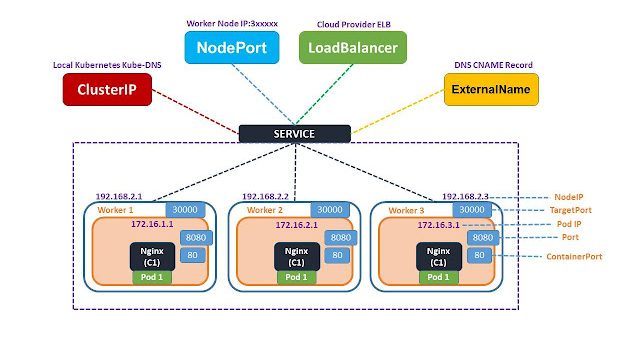
Service Networking in Kubernetes
Pods can change often. Because of this, services give a stable link.
A service points to a group of pods.
So, users do not need to track pod changes.
Why Kubernetes Architecture Matters for DevOps
A good platform design gives:
- Faster releases
- Strong security
- High uptime
- Fewer outages
However, large clusters need expert care.
This is where ZippyOPS helps.
ZippyOPS offers consulting, setup, and managed services for Kubernetes, DevOps, DevSecOps, and cloud systems. Their teams build secure microservices, automate tasks, and use AIOps to spot issues early.
Through their Services
https://zippyops.com/services/
they support CI/CD, MLOps, DataOps, and cloud tools.
Their Solutions
https://zippyops.com/solutions/
help teams move to cloud-native designs.
Their Products
https://zippyops.com/products/
add ready-made tools for monitoring and automation.
You can also learn from their Kubernetes videos at:
https://www.youtube.com/@zippyops8329
Because of this full support, teams run cloud systems with less risk and more speed.
Conclusion
Kubernetes powers most modern cloud platforms. It links control planes, nodes, and services into one smart system.
When used well, it brings scale, speed, and strong security.
With ZippyOPS, teams can move faster while keeping their apps and data safe.
For consulting and managed services, contact:
sales@zippyops.com