Cloud Security forms the base of safe and reliable cloud computing. Because companies now run applications, data, and services across public, private, and hybrid clouds, protection must exist at every layer. As a result, businesses rely on modern security tools to protect users, systems, and sensitive information.
At the same time, security teams must manage access, compliance, and privacy without slowing down delivery. Therefore, modern cloud platforms combine identity control, policy enforcement, and threat detection into one connected system.
According to NIST, cloud environments follow a shared responsibility model between the provider and the customer, which helps keep systems scalable and dependable.
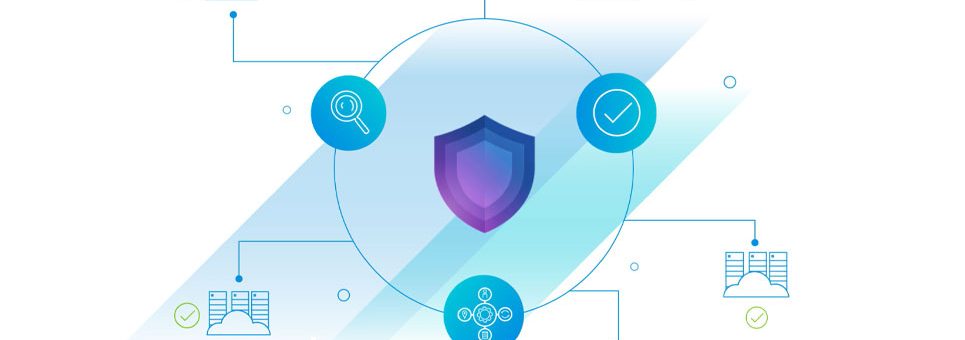
Why Cloud Security Matters for Businesses
Cloud Security keeps data safe as it moves between users, applications, and storage platforms. However, risks grow as more systems shift online. Because of this, companies need clear rules that control who can access each service.
Moreover, attackers now focus on digital workloads. As a result, organizations use encryption, identity checks, and continuous monitoring to stop threats early.
At the same time, strong protection also supports compliance. Since many industries must follow GDPR, ISO, or SOC 2, built-in safeguards make audits easier and faster.
How Cloud Security Protects Digital Assets
Modern security platforms protect networks, workloads, and storage through one connected system. Because everything runs from a central control layer, risks become easier to find and manage.
In addition, automated alerts and activity logs help teams act before small issues become major problems.
Cloud Security Through Centralized Control
Cloud Security uses a single control plane to manage users, networks, and workloads. Because policies apply from one place, teams can block threats and enforce rules faster.
Consequently, visibility improves while blind spots disappear.
Identity and Access Management in the Cloud
Secure cloud platforms use identity tools to decide who can log in and what actions they can take. For example, multi-factor login and role-based access reduce the chance of misuse.
As a result, only approved users can reach sensitive systems.
Cloud Security for Compliance and Data Privacy
Cloud Security helps companies meet legal and industry rules. Through encryption, logging, and audit trails, teams can prove that data remains protected.
Therefore, businesses can manage customer information with confidence while meeting global standards.
Business Benefits of Cloud Security
Strong protection brings both safety and savings. Because cloud-based tools scale as needed, companies avoid buying large hardware or running complex systems.
At the same time, automated updates reduce manual work, which keeps teams focused on innovation.
Lower Operating Costs in Cloud Environments
Cloud Security removes the need for heavy on-premise tools. Since companies pay only for what they use, expenses stay under control.
Moreover, automatic updates reduce support effort and improve efficiency.
Better Reliability and System Uptime
Cloud-based protection includes backups, disaster recovery, and threat detection. Therefore, systems stay online even during attacks or failures.
This keeps users productive at all times.
Cloud Security and IT Team Efficiency
Cloud Security platforms update patches and security rules automatically. Because of this, IT teams no longer need to manage each server by hand.
As a result, protection becomes faster and more accurate.
Security Across Hybrid and Multi-Cloud Environments
Most businesses use more than one cloud provider. However, managing protection across many platforms can be complex. A unified security model solves this by applying one policy layer across public, private, and on-premise systems.
At the same time, this approach supports DevOps and DevSecOps pipelines, so protection stays active from development to production.
How ZippyOPS Supports Cloud Security
ZippyOPS helps organizations design, deploy, and manage secure cloud platforms. Through consulting, implementation, and managed services, ZippyOPS delivers Cloud Security across DevOps, DevSecOps, DataOps, Cloud, AIOps, MLOps, Microservices, Infrastructure, and Security.
Because modern systems need both speed and protection, ZippyOPS builds safety into every layer. Teams can explore services at
https://zippyops.com/services/
and solutions at
https://zippyops.com/solutions/.
Moreover, ZippyOPS products add automation and monitoring that improve cloud protection in real time. These tools are available at
https://zippyops.com/products/.
For demos and learning, teams can follow
https://www.youtube.com/@zippyops8329.
Cloud Security as a Business Growth Enabler
Cloud Security does more than block attacks. It allows teams to launch applications, use AI, and scale platforms with less risk.
At the same time, strong protection builds customer trust. Therefore, companies that invest in secure cloud platforms gain both safety and long-term advantage.
Conclusion
Cloud Security is the backbone of modern digital business. It protects data, users, and systems while supporting speed, scale, and compliance.
ZippyOPS helps organizations turn cloud protection into a business strength through expert consulting, secure implementation, and reliable managed services. To learn how your cloud platform can stay safe and future-ready, contact sales@zippyops.com.