Popular DevOps Tools for 2026: A Comprehensive Guide
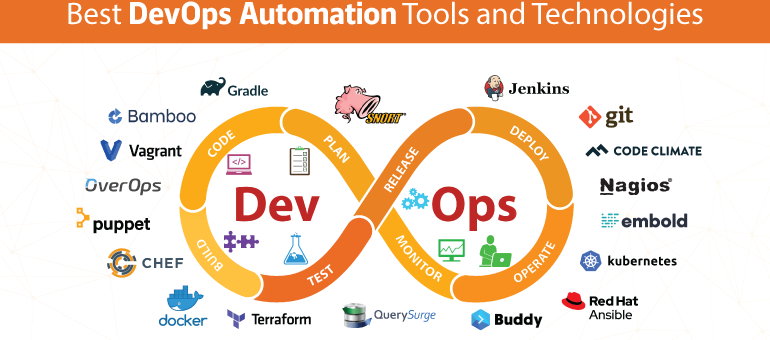
In 2026, DevOps is still the backbone of modern software development, enabling faster and more efficient delivery cycles. A variety of both paid and open-source DevOps tools are available to help teams streamline their processes, automate tasks, and enhance collaboration. In this guide, we’ll explore some of the most popular DevOps tools you should consider for your organization.
ZippyOPS offers specialized consulting, implementation, and managed services across DevOps, DevSecOps, Cloud, and more. With expertise in Automation, Microservices, Infrastructure, and Security, ZippyOPS is your go-to partner for optimizing your DevOps strategy.
1. Docker: Containerization Made Simple
Docker remains one of the most popular DevOps tools for containerization. As an open-source platform, it allows developers to package applications and their dependencies in portable containers. This streamlines the process of deploying applications, ensuring they run consistently across various environments. Docker is compatible with most programming languages and integrates well with other tools like Jenkins, Bamboo, and Ansible.
The platform’s growing popularity is reflected in its widespread use among enterprises. In fact, Docker led the enterprise container platform category in 2018, according to Forrester.
2. Ansible: Simplifying Automation
Ansible is a powerful, agentless automation tool that is widely used for software provisioning, configuration management, and deployment. Written in simple YAML syntax, it’s easy for DevOps teams to automate complex tasks without needing a dedicated systems administrator. As a result, Ansible has become a preferred tool for many DevOps teams worldwide.
If you’re looking to streamline your automation efforts, ZippyOPS can help implement Ansible to improve your infrastructure automation.
3. Git: Source Code Version Control
Git has firmly established itself as the leading version control tool in the DevOps ecosystem. Used by giants like Amazon, Microsoft, and Facebook, Git helps DevOps engineers track changes, manage branches, and coordinate development efforts. Integrating Git with platforms like GitHub or GitLab can further enhance team collaboration and version management.
Git’s ability to easily roll back code changes and support branching models makes it indispensable for development teams.
4. Puppet: Manage Complex Deployments with Ease
Puppet is a configuration management tool that helps automate the deployment, inspection, and delivery of software. Its vast library of modules makes it a versatile solution for managing complex environments. For large-scale projects, Puppet Enterprise provides advanced features such as multi-team collaboration and resource management.
ZippyOPS can assist your organization with Puppet integration to enhance software delivery automation and improve your operational efficiency.
5. Chef: Infrastructure as Code
Chef is another widely used configuration management tool that allows DevOps teams to define infrastructure as code. By automating the deployment of infrastructure and applications, Chef helps ensure that systems are configured correctly and consistently. It integrates seamlessly with cloud-based platforms and can manage configurations across distributed environments.
Chef is particularly beneficial for large enterprises looking to scale their infrastructure automation.
6. Jenkins: Automating CI/CD Pipelines
Jenkins is a highly popular open-source tool for automating Continuous Integration (CI) and Continuous Deployment (CD) pipelines. With an extensive plugin ecosystem, Jenkins integrates with numerous DevOps tools and enables real-time testing and reporting of code changes. It supports multiple operating systems, including Linux, Windows, and macOS.
Whether you’re using Docker, Kubernetes, or Ansible, Jenkins can streamline your software delivery process by automating build, test, and deployment tasks.
7. Nagios: Monitoring and Alerts
Nagios is one of the most reliable DevOps monitoring tools available today. It allows teams to monitor the health of applications, services, and networks. Nagios can detect outages, failures, and performance issues, ensuring that teams can respond quickly to resolve problems.
Nagios Core and the more feature-rich Nagios XI edition both offer a robust set of monitoring capabilities that are critical to maintaining system health in a DevOps environment.
8. Splunk: Analyze Machine Data in Real Time
Splunk is a powerful tool for analyzing and visualizing machine data. It allows DevOps teams to easily search through logs and gain insights into system performance, security, and user behavior. With Splunk, you can quickly identify issues and make data-driven decisions that enhance your team’s efficiency and effectiveness.
It is especially beneficial when integrated with tools like Docker and Kubernetes to monitor containerized environments.
9. Bamboo: Streamlining CI/CD with Integrated Workflows
Bamboo, developed by Atlassian, is a continuous integration and deployment (CI/CD) tool that automates the build, test, and release process. Unlike Jenkins, Bamboo is a paid tool that offers a user-friendly interface and a range of prebuilt functionalities to streamline deployment workflows.
By integrating Bamboo with tools like JIRA and Bitbucket, teams can ensure a smoother and more efficient delivery process.
10. ELK Stack: Powerful Data Aggregation and Visualization
The ELK Stack, which includes Elasticsearch, Logstash, and Kibana, is a robust and scalable solution for centralized logging. Elasticsearch enables efficient search and analytics, Logstash collects data, and Kibana provides visualization capabilities. This powerful combination helps DevOps teams monitor system health and debug issues with ease.
As businesses increasingly rely on large-scale applications, having a reliable logging solution like the ELK Stack is essential for efficient problem resolution.
11. Kubernetes: Simplifying Container Orchestration
Kubernetes, a container orchestration platform, automates the management and scaling of containerized applications. Kubernetes enables teams to deploy, scale, and manage containers across clusters of machines. When used in combination with Docker, Kubernetes makes it easier to run and scale complex applications.
While Kubernetes is not a complete solution on its own, it is a critical component of a modern DevOps toolchain, especially for organizations looking to leverage microservices architectures.
12. Selenium in DevOps tools: Automating Web Application Testing
Selenium is an open-source tool used to automate testing for web applications. By allowing teams to write test scripts in various programming languages, Selenium ensures that your web applications function correctly across browsers and platforms. It integrates seamlessly with tools like Jenkins and Docker to facilitate continuous testing within a CI/CD pipeline.
Many Fortune 500 companies rely on Selenium to automate and streamline their testing processes.
13. Vagrant in DevOps tools: Consistent Development Environments
Vagrant is a tool for managing virtual machine environments in a consistent manner. It allows developers to create reproducible environments across different systems. Vagrant integrates with tools like Ansible, Puppet, and Chef to further enhance its capabilities, making it an essential tool for any DevOps team looking to replicate production environments for development and testing purposes.
14. Maven in DevOps tools: Automating Java Builds
Maven is primarily used for automating the build process in Java-based projects. It simplifies dependency management, compiles code, and runs tests. Maven’s project object model ensures that all tasks are executed systematically, reducing human error in the build process.
This tool is especially beneficial for large Java projects that require a structured, consistent build process.
15. Gradle in DevOps tools: A Flexible Build Automation Tool
Gradle is a flexible, open-source automation tool that supports multiple programming languages, including Java, Python, and C++. It is highly efficient due to its incremental builds and build cache, which make it faster than Maven for certain tasks. Gradle’s versatility and support for multi-project builds have made it a popular choice among modern development teams.
DevOps Orchestration: Streamlining Automation with DevOps tools
DevOps orchestration is a crucial step for organizations that want to fully automate their software delivery process. By coordinating the tasks automated by various DevOps practices, orchestration ensures that each part of the pipeline operates efficiently and in harmony.
DevOps orchestration can lead to several key business benefits, including:
- Faster software delivery
- Quicker release of new features
- Minimized deployment time
- Lower service delivery costs
- Increased product reliability
To make the most out of your DevOps efforts, it’s essential to adopt the right orchestration tools and ensure they align with your business goals.
ZippyOPS offers DevOps orchestration consulting and services to help you achieve full automation, enhance collaboration, and improve software quality.
For more information on how ZippyOPS can help your organization optimize its DevOps practices, visit ZippyOPS Services.
Ready to take your DevOps strategy to the next level? Contact us at sales@zippyops.com for a personalized consultation.