What Does a Service Mesh Do? Understanding Its Role in Modern Applications
A service mesh is an increasingly essential tool for managing communication between microservices in complex applications. This post explains what a service mesh does, when to use it, and its key benefits.
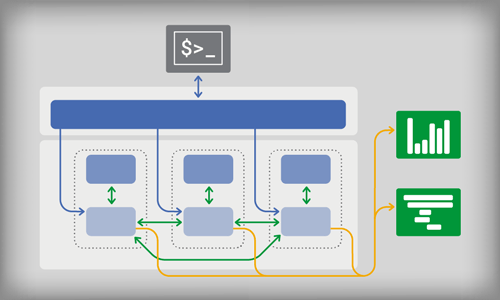
What Is a Service Mesh?
In today’s application development landscape, microservices architecture is becoming the norm. Applications are broken down into smaller services—such as user registration, data lookups, and reviews—which need to interact seamlessly. This creates a need for a service mesh to facilitate communication between these services.
The primary goal of a service mesh is to simplify this communication by providing common functionalities like:
- Authentication: Verifying that traffic is from a legitimate source.
- API Management: Controlling the types of API calls made between services.
- Traffic Management: Ensuring the smooth flow of data between services.
Rather than forcing application developers to implement these features within each service, a service mesh consolidates these tasks. This allows developers to focus on building the features that drive business value.
Service Mesh vs. API Gateway
To understand the function of a mesh, it’s useful to compare it with an API gateway. An API gateway primarily handles “north-south” traffic, which is external traffic coming into your system. This could be user requests from a mobile app or another external service.
In contrast, a service mesh manages “east-west” traffic, which is internal communication between services within your application. The service mesh ensures that these services can interact efficiently, securely, and reliably, often handling tasks like traffic routing, rate limiting, and security enforcement.
Think of it this way:
- API Gateway = Handles traffic from external clients to your services.
- Service Mesh = Handles communication between the services themselves.
Service Mesh vs. Traditional Networking Tools
A service mesh might seem like a new concept, but it builds on previous networking paradigms. For example, technologies like Kubernetes have already begun abstracting away the underlying network topology, enabling services to communicate regardless of where they are physically located. A mesh takes this abstraction a step further by adding application-level awareness and functionality, such as mutual TLS (mTLS) for secure communication between services.
While past networking solutions focused on managing IP addresses or low-level network infrastructure, a mesh provides higher-level capabilities like service-to-service authentication, traffic encryption, and visibility.
Key Benefits
For Application Consumers (End Users)
When a service mesh is properly implemented, consumers of your application may not directly notice its presence. However, they will experience several indirect benefits:
- Improved Reliability: With a mesh handling communication, your application is more resilient to errors.
- Enhanced Security: A mesh ensures that data flows securely between services, reducing the chances of a breach.
- Faster Performance: Optimized traffic management can lead to better response times for users.
For Application Developers and Platform Operators
For developers and operators, a service mesh streamlines the management of microservices. Instead of embedding complex features like service-to-service authentication and traffic routing into each individual service, developers can leverage the mesh to apply these functionalities globally. This reduces duplication of effort and ensures consistency across the entire application.
Mesh Features
A typical service mesh includes the following functionalities:
- Authentication & Authorization (AuthN/AuthZ): mesh ensures that each service is who it claims to be and can perform the actions it’s allowed to.
- Traffic Management: Advanced routing allows traffic to be directed based on various factors, such as the service’s version or a specific API call.
- Rate Limiting: Prevents a single service from overwhelming the system with requests, ensuring fair resource distribution.
- Encryption (mTLS): Secures data by encrypting traffic between services, protecting sensitive information.
- Observability: Provides detailed metrics and tracing, allowing developers to monitor service performance and troubleshoot issues more effectively.
- Chaos Engineering: Injects controlled failures into your traffic to test how services respond and recover, helping identify vulnerabilities in your system.
ZippyOPS: Elevating Your DevOps and Microservices Strategy
Implementing and managing a service mesh requires expertise in multiple domains, including DevOps, Cloud, Security, and Microservices. ZippyOPS offers comprehensive consulting, implementation, and managed services to help organizations optimize their DevOps workflows.
Whether you’re adopting DevSecOps, managing DataOps, or transitioning to a cloud-native infrastructure, ZippyOPS can guide you through the complexities of service mesh and related technologies. For example, our AIOps and MLOps solutions can seamlessly integrate with your mesh for enhanced automation and performance.
Explore how ZippyOPS can help streamline your operations:
For a demo or further inquiries, reach out to us at sales@zippyops.com.
Service Mesh Adoption in the Industry
The adoption of service meshes is growing, but how does it compare to other technologies in the networking space? While various alternatives exist—such as container networking and traditional API management tools—none provide the comprehensive service-to-service management that a mesh does. It remains the best solution for handling microservices communication and ensuring smooth, secure operations at scale.
Conclusion
In summary, a service mesh is a critical tool for managing communication between microservices. It abstracts complex networking tasks and consolidates them into a centralized platform, enabling better security, performance, and reliability. For developers and platform operators, this means less effort spent on repetitive tasks and more time to focus on creating valuable features.
As you explore service mesh for your organization, consider the benefits it can offer. With ZippyOPS’ expertise in Cloud management, DevOps implementation, and Security, your transition to a mesh architecture can be smooth and efficient.