Top 10 Infrastructure as Code Tools for DevOps Automation
Infrastructure as Code (IaC) has revolutionized how companies manage IT infrastructure, providing a fast, reliable, and repeatable way to configure resources from the ground up. IaC enables DevOps teams to provision and manage infrastructure—such as virtual machines, load balancers, and networks—using code, making deployments much more efficient.
Gone are the days when provisioning a large number of physical servers took hours. With the right IaC tool, you can configure servers and deploy them to production in just a fraction of the time. This level of automation reduces the likelihood of human error and improves efficiency across development teams.
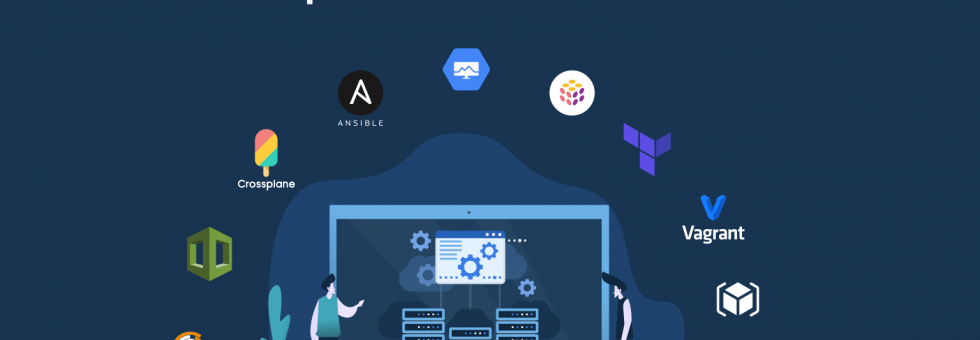
In this blog, we’ll cover the top 10 Infrastructure as Code tools that help streamline deployment processes, reduce manual tasks, and promote collaboration within DevOps teams.
1. Terraform for Infrastructure as Code
Terraform stands out as one of the most popular and powerful IaC tools available today. As an open-source solution, Terraform offers incredible flexibility and supports a wide variety of cloud providers, including AWS, GCP, and Azure.
Terraform allows DevOps teams to define infrastructure in code, offering consistency across environments and reducing human errors during deployment. Additionally, it supports resource management across hybrid and multi-cloud environments, making it a versatile tool for complex workflows.
With features like the terraform plan command, Terraform helps teams validate configurations before deployment, ensuring infrastructure changes meet expectations and avoiding costly mistakes. For better project cost management, Terraform integrates well with tools like Infracost, and for enhanced security, you can use Bridgecrew to ensure compliance with industry standards.
ZippyOPS offers comprehensive consulting and implementation services to help businesses integrate and optimize Terraform into their workflows, ensuring smooth DevOps automation across cloud platforms.
2. AWS CloudFormation for Infrastructure as Code
AWS CloudFormation is another highly regarded IaC tool, particularly for organizations heavily invested in the AWS ecosystem. CloudFormation allows you to define and manage AWS resources using YAML or JSON templates, simplifying infrastructure provisioning and scaling.
CloudFormation is deeply integrated into AWS, offering seamless support for the entire AWS platform. It provides powerful features such as Rollback Triggers, which restore infrastructure to a previous state in case of an error, ensuring controlled deployments.
However, CloudFormation’s AWS-specific nature may limit its flexibility for multi-cloud environments. Despite this, its close integration with AWS makes it an ideal choice for businesses already using AWS services.
ZippyOPS can guide you through the setup and optimization of AWS CloudFormation to ensure efficient infrastructure management and streamlined deployment processes.
3. Azure Resource Manager (ARM)
Azure Resource Manager is Microsoft’s native IaC tool for managing resources in the Azure cloud. ARM uses templates to define and automate the provisioning of Azure resources, ensuring fast and repeatable deployments.
With ARM, you can group resources, manage access permissions, and monitor costs using tags. The tool’s native support for Role-Based Access Control (RBAC) helps ensure security by controlling who can access specific resources. Additionally, ARM templates enable parallel deployment of resources, speeding up the deployment process significantly.
By leveraging ZippyOPS’s expertise in Cloud, Infrastructure, and Security, businesses can integrate Azure Resource Manager into their DevOps workflows, enhancing collaboration and reducing deployment times.
4. Google Cloud Deployment Manager for Infrastructure as Code
Google Cloud Deployment Manager provides a powerful and straightforward way to automate the creation and management of resources in the Google Cloud Platform (GCP). This tool uses YAML or Python scripts to automate the provisioning of resources, offering easy-to-understand configuration options for cloud infrastructure.
Deployment Manager’s tight integration with the Google Cloud ecosystem allows teams to visualize deployments using GCP’s developer console, ensuring a smooth workflow. Like other IaC tools, Deployment Manager enables users to preview changes before deployment, reducing errors and improving reliability.
For more details on how Google Cloud Deployment Manager compares to other tools, see this article from Google Cloud.
For businesses looking to optimize their GCP deployments, ZippyOPS offers consulting services in DevOps, Cloud, and AIOps to help streamline cloud operations and automation.
5. Pulumi
Pulumi sets itself apart from other IaC tools by offering flexibility in programming language choice. Supporting languages such as Python, JavaScript, TypeScript, Go, and C#, Pulumi is an ideal solution for DevOps teams who want to use their existing skills to automate cloud infrastructure management.
Pulumi can manage resources across major cloud platforms like AWS, GCP, and Azure, making it a versatile tool for multi-cloud environments. Its automation capabilities cover deployment, delivery, quality assurance, and identity control, all with excellent documentation and easy-to-follow tutorials.
ZippyOPS integrates MLOps and DevSecOps into Pulumi workflows to ensure end-to-end infrastructure automation with security and machine learning optimization.
6. Ansible
Ansible, developed by Red Hat, is a widely-used IaC tool that simplifies orchestration and configuration management. It uses YAML-based configuration files, called Playbooks, to define the desired state of infrastructure, automating complex tasks and reducing manual intervention.
Ansible’s default configuration is robust enough to use right out of the box, and its extensive library of modules covers a wide range of use cases. Additionally, Ansible’s active community regularly contributes to Ansible Galaxy, where users can find pre-built configurations for a variety of tasks.
For DevOps teams looking to automate repetitive tasks and improve overall efficiency, ZippyOPS offers expert DevOps consulting and implementation services for Ansible, ensuring fast and secure deployments.
7. Chef
Chef is a powerful IaC tool known for its flexibility and cloud-agnostic nature. It uses recipes and cookbooks—written in Ruby’s Domain Specific Language (DSL)—to automate infrastructure management. Chef supports integration with major cloud providers like AWS, GCP, and Azure, making it highly adaptable.
Chef’s ability to integrate with CI/CD pipelines makes it an excellent choice for organizations looking to scale infrastructure management. Its flexibility, combined with built-in drift elimination, ensures configurations remain consistent even after changes are made.
ZippyOPS helps businesses leverage Infrastructure, Security, and Automated Ops to maximize the benefits of Chef, improving deployment workflows and cloud infrastructure management.
8. Puppet
Puppet is another IaC tool with similarities to Chef. It uses a Ruby-based DSL to define infrastructure, automating deployment and monitoring processes. Puppet ensures that any deviation from the desired state is corrected automatically, helping teams maintain consistent environments across various cloud platforms.
Puppet’s flexibility makes it an excellent choice for complex deployments that require close integration with multiple cloud providers. It is commonly used in CI/CD pipelines to maintain infrastructure consistency and reliability.
By partnering with ZippyOPS, businesses can integrate DevSecOps practices into their Puppet workflows, ensuring secure, automated, and scalable deployments across multiple platforms.
9. Crossplane
Crossplane is an open-source IaC tool built for Kubernetes environments. It extends Kubernetes capabilities to manage infrastructure across cloud platforms, offering consistent APIs that work with AWS, Azure, and GCP.
Crossplane’s Resource Model standardizes resource management across cloud providers, ensuring that credentials, secrets, and status conditions are consistent regardless of the platform in use. Its Kubernetes integration makes it ideal for teams using Kubernetes to orchestrate cloud-native applications.
ZippyOPS offers specialized Cloud and Infrastructure consulting to help businesses implement Crossplane within their Kubernetes-based workflows, ensuring seamless cloud infrastructure management.
10. Vagrant
Vagrant is an IaC tool specifically designed for developers working with virtual machines (VMs) rather than large-scale cloud environments. Developed by HashiCorp, Vagrant simplifies the process of creating, managing, and configuring development environments.
Vagrant works well with VirtualBox, AWS, and other cloud providers, allowing developers to create consistent environments for testing and development. With Vagrantfiles, teams can easily reproduce the same environment across different systems, streamlining collaboration and reducing configuration drift.
ZippyOPS helps teams integrate Infrastructure and Microservices with Vagrant, making it easier to manage small-scale VM setups alongside larger cloud infrastructure projects.
Conclusion for Infrastructure as Code
Infrastructure as Code tools play a crucial role in automating cloud resource management and deployment. These tools streamline the development and deployment processes, saving time, reducing errors, and increasing productivity across DevOps teams. As organizations continue to shift towards IaC, selecting the right tool is vital for maintaining consistency, scalability, and security in cloud operations.
At the same time, integrating DevOps practices such as Automated Ops, MLOps, and Cloud security can optimize IaC workflows further. ZippyOPS offers managed services and consulting in DevOps, Cloud, and AIOps to help businesses unlock the full potential of IaC tools and automation.
For expert guidance and support, reach out to ZippyOPS at sales@zippyops.com.