Kubernetes Ingress vs API Gateway: What You Really Need
The short answer is yes and no. However, the real story behind Kubernetes Ingress vs API Gateway is far more nuanced. Because of rapid Kubernetes adoption, traffic management has evolved fast. As a result, confusion around Ingress, API gateways, and cloud load balancers is common.
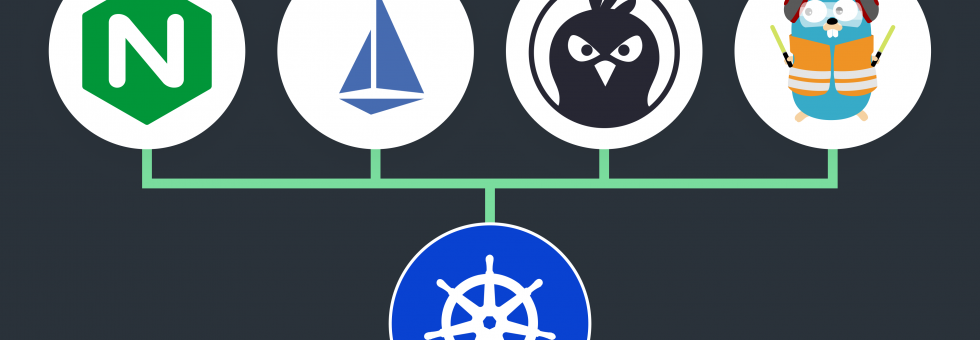
Before going deeper, one critical fact matters. Kubernetes upstream does not ship an Ingress implementation. Instead, it provides an API. Controllers then consume that API to build real functionality. Therefore, an Ingress always consists of two parts: a controller watching Kubernetes APIs and a proxy engine that forwards traffic.
Understanding this distinction makes everything else clearer.
The Original Kubernetes Access Pattern
In the early days, Kubernetes relied on two main access methods: Service LoadBalancers and Ingress resources. Although they were designed to work together, they can also run independently.
Service LoadBalancer Access
A Service of type LoadBalancer attracts traffic into the cluster. After that, traffic reaches Pods directly or through kube-proxy. Because this works at Layer 3 and Layer 4, it focuses on IP and port routing. However, when a Pod does not exist on the receiving node, kube-proxy forwards traffic internally.
As a result, a LoadBalancer-only approach can still provide consistent access across the cluster.
Ingress-Only Access
Ingress works differently. It requires another mechanism to bring traffic to the Ingress Pod. Once traffic arrives, the Ingress proxy applies HTTP routing rules. Because it runs inside the cluster, it can reach Pods directly over the CNI network.
At the same time, external connectivity often depends on cloud-specific or custom infrastructure.
Shared Dependency on Services
Both patterns rely on the Service API. The LoadBalancer is a Service type, while Ingress references Services to define backends. Therefore, Services remain the backbone of Kubernetes networking.
Cloud Providers and Kubernetes Ingress vs API Gateway
Cloud providers introduced additional complexity. Instead of following the upstream model, they integrated networking through cloud controllers.
Most providers already had Layer 4 Network Load Balancers. These mapped cleanly to Kubernetes Services. However, they also offered Application Load Balancers. One provider mapped these to the Ingress API, and others followed.
Unlike in-cluster Ingress controllers, these cloud Ingresses run outside Kubernetes. Because of this, they allocate IP addresses themselves. Consequently, cloud Ingress and cloud LoadBalancers are independent resources.
This divergence is a major reason the Kubernetes Ingress vs API Gateway discussion became confusing.
Is Kubernetes Ingress an API Gateway?
Not really.
An API gateway includes advanced features such as header-based routing, request transformation, and policy enforcement. The Kubernetes Ingress API does not support many of these features. For example, header matching for A/B testing is missing.
Because of this limitation, most Ingress controllers extend functionality using Custom Resource Definitions (CRDs).
Are All Kubernetes Ingress Controllers the Same?
Yes and no.
All controllers that rely strictly on the Ingress API share the same basic feature set. However, almost every production-grade Ingress adds CRDs. Therefore, configurations differ widely.
With the exception of the CNCF NGINX Ingress, most controllers expose unique configuration models. As a result, configurations are not portable between vendors.
Kubernetes Ingress vs API Gateway in Practice
To understand real differences, let’s compare three popular implementations: Gloo Edge, Traefik Proxy, and Kong Kubernetes Ingress. Each supports API gateway features but approaches configuration differently.
Gloo Edge and Kubernetes Ingress vs API Gateway
Gloo Edge replaces the Ingress object with its own CRDs. Routing is defined using a VirtualService.
apiVersion: gateway.solo.io/v1
kind: VirtualService
metadata:
  name: default
  namespace: gloo-system
spec:
  virtualHost:
    domains:
    - '*'
    routes:
    - matchers:
      - exact: /pre
      options:
        prefixRewrite: /backend
      routeAction:
        single:
          upstream:
            name: ingress-test-8080
            namespace: gloo-system
Solo’s engineers focused heavily on developer experience. Moreover, Gloo automatically discovers Kubernetes Services and converts them into upstreams. It also integrates OpenAPI specifications for API publishing and documentation.
Gloo uses Envoy, a modern and well-supported proxy engine.
Traefik Proxy Approach
Traefik translates its existing configuration model into Kubernetes CRDs. URL rewriting happens through Middleware resources.
apiVersion: traefik.containo.us/v1alpha1
kind: IngressRoute
metadata:
  name: simpleingressroute
spec:
  entryPoints:
  - web
  routes:
  - match: PathPrefix(`/pre`)
    kind: Rule
    services:
    - name: ingress-test
      port: 8080
    middlewares:
    - name: replace-path
---
apiVersion: traefik.containo.us/v1alpha1
kind: Middleware
metadata:
  name: replace-path
spec:
  replacePath:
    path: /backend
Traefik excels when the same routing model must run across Kubernetes and non-Kubernetes environments. However, documentation can feel heavy for Kubernetes-first teams.
Traefik uses a custom Go-based proxy engine.
Kong and Kubernetes Ingress vs API Gateway
Kong integrates deeply with native Kubernetes objects. Instead of replacing Ingress, it modifies it using annotations.
apiVersion: configuration.konghq.com/v1
kind: KongIngress
metadata:
  name: demo-customization
route:
  strip_path: true
proxy:
  path: /backend/
This approach improves compatibility with standard Kubernetes resources. However, it can feel complex because behavior is split across Services, Ingresses, and CRDs.
Kong relies on a forked NGINX-based proxy engine.
Gateway API: Simplifying Kubernetes Traffic
To address fragmentation, the Kubernetes Gateway API was introduced. It provides a unified and expressive model for traffic management.
apiVersion: gateway.networking.k8s.io/v1alpha2
kind: HTTPRoute
metadata:
  name: http-filter-redirect
spec:
  rules:
  - matches:
    - path:
        type: PathPrefix
        value: /pre
    filters:
    - type: RequestRedirect
      requestRedirect:
        replacePrefixMatch: /backend
All major Ingress providers already support Gateway API experimentally. Soon, it will become a default Kubernetes feature.
You can explore the official specification from the Kubernetes SIG Networking group at the Gateway API site:
https://gateway-api.sigs.k8s.io/
Cloud Gateways and the Gateway API
The Gateway API also solves cloud-specific challenges. It supports external gateways managed per namespace. For example, Google Kubernetes Engine already implements it using external proxies.
This flexibility finally aligns cloud and in-cluster traffic patterns.
How ZippyOPS Helps With Kubernetes Ingress vs API Gateway
At ZippyOPS, we help teams design, implement, and operate modern Kubernetes networking. Our experts provide consulting, implementation, and managed services across DevOps, DevSecOps, DataOps, Cloud, Automated Ops, AIOps, and MLOps.
Moreover, we work extensively with microservices, infrastructure automation, and security-first architectures. Whether you are migrating from legacy Ingress or adopting the Gateway API, we guide the entire journey.
You can explore our capabilities here:
- Services: https://zippyops.com/services/
- Solutions: https://zippyops.com/solutions/
- Products: https://zippyops.com/products/
For hands-on demos and tutorials, visit our YouTube channel:
https://www.youtube.com/@zippyops8329
Conclusion: Choosing the Right Path
The debate around Kubernetes Ingress vs API Gateway is not about right or wrong. Instead, it depends on scale, features, and operational maturity. Ingress works well for simple routing. API gateways are essential for advanced traffic control. Meanwhile, the Gateway API is bridging the gap.
In summary, understanding the architecture helps you make confident decisions.
If you want expert guidance or managed support, contact us at sales@zippyops.com.