Platform Engineering vs DevOps: Building High-Velocity Teams
Platform engineering and DevOps are often portrayed as opposing approaches, but this perspective is misleading. In reality, both practices can coexist and even complement each other to enhance software delivery and organizational agility.
The term platform engineering has gained significant attention in recent years. Some argue it signals the end of DevOps, but this claim oversimplifies the situation. Much of the debate is fueled by marketing buzz rather than practical insights. Understanding both DevOps and platform engineering is essential before making organizational decisions.
What Is DevOps?
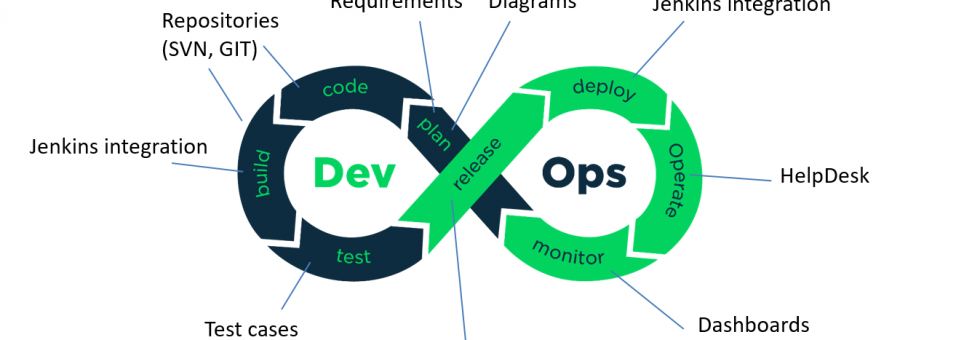
DevOps emerged to break down silos between development and operations teams, fostering collaboration and shared responsibility. Today, it represents a cultural movement and a set of practices that prioritize automation, agility, and transparency.
Organizations embracing DevOps focus on people, processes, and tools. Culturally, teams work inclusively, encourage autonomy, and promote accountability. Process-wise, agile methodologies enable rapid iteration, continuous integration (CI), and continuous delivery (CD). On the tooling side, automation reduces repetitive tasks and ensures faster, high-quality feedback loops.
According to Puppet’s State of DevOps Report, cultural barriers are the main obstacle for organizations trying to advance their DevOps maturity. Large enterprises, in particular, struggle with scaling DevOps practices across multiple teams.
Key Challenges in Scaling DevOps
Scaling DevOps is not just about technology; organizational dynamics play a critical role. When multiple teams use different tech stacks, tools, or cloud providers, redundant work and inefficiencies emerge. Managing these complexities adds operational cost and increases ramp-up times for new initiatives.
Modern cloud-native architectures further complicate scaling. These systems evolve rapidly, demanding developers continuously adapt. High cognitive loads and intricate interdependencies can slow down teams unless proper frameworks are in place.
Cultural misalignment, reporting structures, and mismanaged incentives often exacerbate these challenges. Interestingly, high-performing organizations frequently leverage platform teams to overcome these barriers.
What Is Platform Engineering?
Platform engineering addresses scaling and efficiency challenges by creating standardized, self-service platforms for development teams. While it introduces some governance, it does not contradict DevOps principles. Instead, it complements them by improving developer experience and accelerating delivery.
Gartner defines platform engineering as the creation of internal platforms that provide APIs, tools, services, and support in a way that teams can easily consume. Evan Bottcher describes it as:
“A digital platform is a foundation of self-service APIs, tools, services, knowledge, and support which is arranged as a compelling internal product. Autonomous delivery teams can make use of the platform to deliver product features at a higher pace, with reduced coordination.”
Platform engineering teams are cross-functional, often including experts from operations, security, development, and product management. They focus on enabling fast, secure, and consistent development while reducing duplicated effort. By prioritizing developer experience, these teams empower product teams to deliver features quickly without compromising quality.
Gartner forecasts that by 2026, 80% of application development organizations will have established platform engineering teams. This trend shows that platform engineering is not replacing DevOps; it is evolving alongside it.
How Platform Engineering Supports Organizational Goals
If your organization is experiencing bottlenecks in DevOps adoption, platform engineering may provide a solution. High-performing enterprises often combine platform teams with value-stream-oriented product teams. This approach enables:
- Improved developer productivity through reusable components and self-service platforms
- Faster feature delivery by reducing coordination overhead
- Enhanced security and quality via standardized tooling and automated checks
- Cost management and operational efficiency through centralized platforms
A successful platform team considers developer experience, productivity, security, quality, and operational stability. They provide easy-to-use building blocks that allow product teams to focus on customer-centric features.
ZippyOPS Services in Platform Engineering and DevOps
Organizations looking to implement platform engineering and mature DevOps practices can benefit from expert guidance. ZippyOPS provides consulting, implementation, and managed services in:
- DevOps, DevSecOps, DataOps, and Cloud
- Automated Ops, AIOps, MLOps, and Microservices
- Infrastructure and Security management
Our teams help organizations design, implement, and manage internal platforms that streamline software delivery while enhancing security and operational efficiency. Learn more about our services, solutions, and products. For tutorials and demos, check out our YouTube playlist.
Conclusion
The conversation about DevOps being “dead” is largely noise. Platform engineering complements DevOps by addressing scaling, efficiency, and developer experience challenges. Organizations that adopt both practices can accelerate their software delivery, enhance security, and achieve operational excellence.
For organizations ready to modernize their DevOps and platform engineering strategies, reach out to ZippyOPS at sales@zippyops.com for expert consultation.