Containerized Microservices: Why They Matter for Modern Applications
Containerized microservices have become a core part of modern application design. From startups to large enterprises, teams now prefer this model because it supports speed, scale, and resilience. At the same time, it helps organizations move away from rigid monolithic systems.
Microservices already enable faster releases and independent scaling. However, when combined with containerization, those benefits grow even stronger. Containers provide consistency, isolation, and portability, which are critical for running distributed services in dynamic environments.
Because of this, containerized microservices now power most cloud-native platforms.
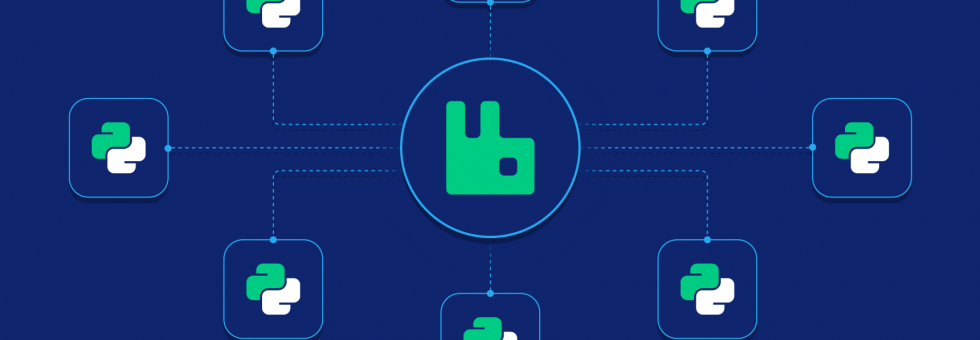
Runtime Options for Containerized Microservices
In the past, microservices often ran directly on physical servers or virtual machines. Although that approach worked, it wasted resources and created dependency conflicts. For example, different services often required different library versions, which caused instability.
Containers solve this problem by packaging the application with its runtime, libraries, and dependencies. As a result, the same container image runs reliably across development, testing, and production.
Moreover, containerized microservices start quickly and consume fewer resources. This efficiency allows teams to run many services on the same infrastructure without conflicts.
Better Security with Containerized Microservices
Security improves significantly when using containerized microservices. Each service runs in its own isolated container, which limits the attack surface. Therefore, a vulnerability in one service does not easily spread to others.
Compared to services deployed directly on a host OS, containers add another layer of protection. In addition, modern platforms support image scanning, policy enforcement, and runtime security.
Organizations often extend this model with DevSecOps practices. ZippyOPS supports this approach by integrating security into CI/CD pipelines while managing infrastructure and cloud security at scale.
Developer-Friendly Architecture
Containerized microservices are easier for developers to build and maintain. Unlike virtual machines, containers do not require a full operating system per service. Consequently, teams save both time and cost.
Developers can focus on a single service without worrying about the entire system. At the same time, they can choose the best language or framework for each use case.
Because of this flexibility, productivity improves and release cycles shorten.
Stronger Isolation and Resource Control
Although containers share the same OS kernel, they still provide strong isolation. Linux control groups and namespaces ensure that CPU, memory, and storage remain properly separated.
This design allows multiple microservices to run on a single node safely. However, high availability still matters. For that reason, services should run in redundant configurations across nodes.
Kubernetes helps manage this complexity by controlling placement, scaling, and recovery. According to the official Kubernetes documentation, its scheduler and self-healing features are designed to maintain service reliability in large clusters (Kubernetes.io).
Service Discovery in Containerized Microservices
Service discovery plays a critical role in microservice architectures. When services scale dynamically, their locations change frequently. Without automation, communication becomes unreliable.
Container platforms simplify this process. Kubernetes, for example, provides built-in service discovery through DNS and networking abstractions. As a result, services can find and talk to each other without hardcoded IP addresses.
This capability makes containerized microservices more resilient and easier to operate.
Tools Powering Containerized Microservices
Docker for Containerized Microservices
Docker remains the most popular container runtime. It allows teams to build lightweight, portable images that run consistently across environments.
Key benefits include:
- Secure and repeatable builds
- Version-controlled images
- Easy sharing across teams and platforms
Because of these features, Docker has become a foundation for cloud migration and modern DevOps workflows.
Kubernetes for Containerized Microservices at Scale
While Docker handles containers, Kubernetes manages them at scale. It automates deployment, scaling, networking, and health checks.
Kubernetes also supports autoscaling, rolling updates, and fault recovery. Therefore, it is ideal for managing containerized microservices in production environments.
ZippyOPS helps organizations design, implement, and manage Kubernetes platforms through its consulting and managed services. These offerings span DevOps, Cloud, Automated Ops, AIOps, and MLOps, ensuring reliable and secure operations.
Learn more about ZippyOPS services at https://zippyops.com/services/ and explore solution accelerators at https://zippyops.com/solutions/.
Fast Initialization and Execution
Virtual machines often take minutes to boot and require gigabytes of storage. Containers, on the other hand, start in milliseconds and use minimal disk space.
This speed matters because microservices often scale up and down based on demand. Faster startup times mean better responsiveness and lower infrastructure costs.
As a result, containerized microservices handle unpredictable workloads more efficiently.
How ZippyOPS Supports Containerized Microservices
ZippyOPS provides end-to-end support for containerized microservices, including consulting, implementation, and managed services. Its expertise covers Microservices, Infrastructure, Security, Cloud, DataOps, and MLOps.
In addition, ZippyOPS builds products and automation frameworks that simplify day-to-day operations. You can explore these offerings at https://zippyops.com/products/.
For practical demos and walkthroughs, the ZippyOPS YouTube channel offers hands-on insights into Kubernetes, DevOps, and cloud-native tools: https://www.youtube.com/@zippyops8329.
Conclusion: The Real Value of Containerized Microservices
Containerized microservices combine flexibility, speed, and security into a single deployment model. They enable independent scaling, faster releases, and efficient resource usage.
When paired with platforms like Docker and Kubernetes, they become the backbone of modern cloud-native systems. In summary, this approach helps businesses innovate faster while keeping costs under control.
If you want to design, secure, or manage containerized microservices at scale, reach out to the ZippyOPS team at sales@zippyops.com.