Microservices: From APIs to Containerized Applications
In today’s fast-paced software landscape, microservices have redefined how applications are developed and deployed. By moving from traditional API structures in monolithic systems to containerized microservices, organizations can achieve higher scalability, flexibility, and efficiency. Moreover, this shift has opened new pathways for seamless API development and advanced software integration.
In this article, we explore the journey from APIs to containers and how microservice have revolutionized modern software architectures.
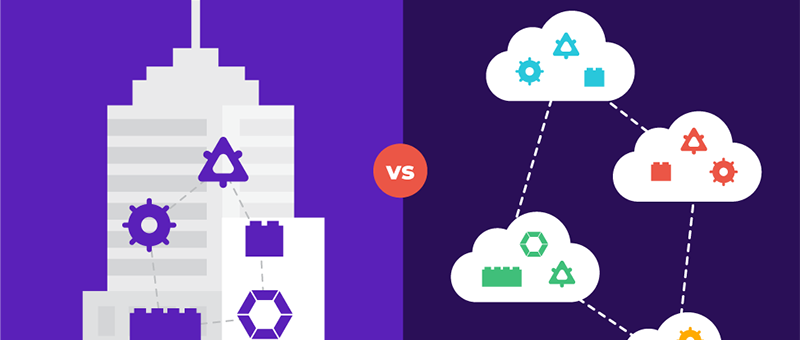
Understanding APIs: Consumer vs. Provider Perspectives
APIs exist to enable communication between different systems. Therefore, there are always two perspectives: the API consumer and the API provider.
From a consumer’s viewpoint, an API is essentially an interface with a URL. Consumers rarely care about the underlying infrastructure. Their priority is usability, reliability, and security.
On the other hand, API providers focus on scalability, maintainability, and performance. The infrastructure behind the API—whether it supports millions of users or just a few—plays a critical role. As usage grows, monolithic systems struggle to keep up, prompting providers to explore more flexible solutions like microservices.
With the rapid rise of online platforms like Netflix, Amazon, and Uber, API providers needed architectures that could scale efficiently. This demand drove the adoption of microservice architectures, which offer modular, independent components that can grow or shrink as required.
The Rise of Microservices Architecture
Although the term “microservices” was officially coined in 2011/2012, the concept has existed for decades. Its core goal is to make systems flexible, maintainable, and highly scalable—a perfect fit for modern API development.
Microservices bring several benefits for API providers:
- Parallel Development: Different teams can develop separate services simultaneously, reducing time to market.
- Scalability: Individual services scale independently based on demand, optimizing resource usage.
- Distributed Ownership: Teams can manage specific microservices without affecting the entire application.
- Improved Reliability: Outages in one service do not compromise the entire system.
API consumers also enjoy advantages. Smaller, modular services allow for better integration, easier testing, and reduced impact when API endpoints change. Consequently, microservices have enhanced API development, making software communication more efficient and manageable.
ZippyOPS supports organizations in adopting microservice, offering consulting, implementation, and managed services for DevOps, DevSecOps, DataOps, Cloud, Automated Ops, AIOps, MLOps, Microservice, Infrastructure, and Security. Learn more about our services and solutions.
Streamlining Microservices Deployment with Containers
Deploying microservices introduces challenges, particularly around dependencies and consistency. Containers address these issues by packaging applications with all required dependencies, ensuring predictable and isolated deployments.
With containers, microservices can be deployed in parallel, scaled efficiently, and easily balanced across infrastructure. Cloud-native platforms further enhance container adoption, enabling organizations to deploy APIs and services at scale with minimal friction.
As this CNCF report highlights, containerization is now a standard in microservice architecture, making infrastructure management simpler and more resilient.
The Future of Microservices and APIs
Even as microservices and APIs mature, new trends are shaping their evolution:
- API Governance: OpenAPI and similar frameworks ensure APIs are secure, consistent, and discoverable.
- Advanced API Capabilities: From NLP to image recognition and predictive analytics, APIs are driving AI-powered applications.
- API-driven DevOps: Infrastructure as Code and cloud-native deployment rely heavily on APIs to automate operations.
- Edge Enablement: APIs are increasingly powering IoT devices and edge computing applications.
- Security and Observability: API gateways and service meshes enhance reliability, observability, and protection.
ZippyOPS helps organizations navigate these trends, integrating microservice, APIs, cloud, and security into seamless operations. Explore our products and check out our YouTube channel for demos and tutorials.
Conclusion
The transition from monolithic APIs to containerized microservices has unlocked unprecedented possibilities. Organizations can now build, deploy, and scale software faster and more reliably.
To stay ahead, focus on key trends like governance, security, and cloud-native deployments. At the same time, exploring AI, DevOps, and edge integration will keep teams at the cutting edge of innovation.
For guidance on microservice adoption, API optimization, or cloud transformation, contact ZippyOPS at sales@zippyops.com.