Monolith to Microservices Migration: A Practical Guide
Migrating a monolith to microservices can be complex, time-consuming, and requires careful planning. However, with the right strategy, this process can significantly improve development speed, scalability, and operational efficiency. In this guide, we’ll explore the steps, benefits, challenges, and best practices for a successful migration.
While this guide references AWS for examples, the principles apply to any infrastructure setup.
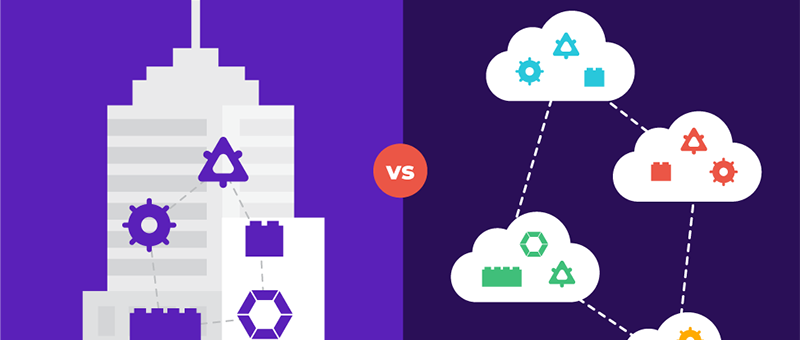
Understanding the Monolith
A monolith application is a single, unified codebase that contains all functionality. Although this simplifies initial development, it introduces several challenges over time:
- Collaboration Challenges: Multiple engineers working on the same repository can lead to merge conflicts. Consequently, time is spent resolving conflicts rather than developing features.
- Bug Risks: As the codebase grows, separation of concerns can fade. Minor changes may unintentionally affect unrelated features.
- Slower Time to Production: Even with CI/CD in place, testing and deployment take longer due to the size and complexity of the repository.
- Limited Tech Stack: Monoliths rely on a single technology stack, which restricts flexibility to adopt new tools.
- Fault Isolation Issues: Failure in one module can impact the entire system.
- Longer Debugging Time: Changes in one component may break others, making bug fixes more time-consuming.
- Scalability Constraints: Scaling requires the entire system to scale, even if only one component needs additional resources.
Despite these challenges, monoliths have advantages:
- Rapid MVP Development: Monoliths are ideal for testing a product-market fit quickly.
- Simplified Development: Components reside in a single codebase, reducing communication overhead.
- Lower Operational Complexity: One system to monitor reduces operational burden.
- Faster Performance: With all logic in one place, some operations can be executed more efficiently.
For smaller applications or MVPs, monoliths can still be a practical choice.
Typical Monolith Architecture
A monolith usually follows this flow:
- Infrastructure supported by a load balancer
- DNS mapping directs requests to the application
- A single database stores all data
- Optional cache layers improve performance
- Internal orchestration handles interactions between components
This simplifies routing, authentication, and database management but can become restrictive as applications grow.
Benefits of Microservices
Microservices break down a monolith into smaller, independently deployable services. Key benefits include:
- Faster Development: Teams can develop, test, and deploy services independently.
- Easier Debugging: Isolated components simplify problem identification.
- Flexible Scalability: Services can scale individually without affecting the system.
- Tech Stack Flexibility: Each service can use the most suitable technology.
However, microservices introduce new challenges:
- Higher Infrastructure Costs: Independent services may increase expenses.
- Operational Overhead: Managing many services adds complexity.
- Service Dependencies: Inter-service communication can lead to latency and integration issues.
- Data Consistency: Distributed databases require careful synchronization.
For more insights on distributed architecture, refer to Martin Fowler’s Microservices Guide.
Monolith to Microservices Migration Strategy
Migrating a monolith requires a thorough understanding of existing code, dependencies, and functionality. A structured approach is essential:
- Identify Functional Modules: Group related functionality to form individual microservices.
- Design an Orchestration Layer: Implement a Backend-for-Frontend (BFF) to manage calls from the UI to multiple microservices.
- Implement Authentication & Authorization: Each service should handle secure access independently.
- Plan Data Storage: Prefer isolated databases per service. For unavoidable shared data, implement synchronization mechanisms to avoid race conditions or data leakage.
- Create Common Libraries: Abstract repetitive tasks like database or cache access to maintain consistency.
- Set Coding Standards: Ensure uniform code quality and practices across all services.
- Release Planning: Define rollout strategies, UAT processes, test plans, and rollback procedures.
- Use Canary Releases: Deploy microservices gradually to monitor health and performance.
- Comparator Service: Validate microservice results against the monolith before full migration.
- Operational Health & Rollback: Maintain a runbook for incidents and mitigation strategies.
- Implement Scaling: Design each microservice to scale independently and handle traffic spikes.
At ZippyOPS, we offer consulting, implementation, and managed services covering DevOps, DevSecOps, DataOps, Cloud, Automated Ops, Microservices, Infrastructure, and Security. Our expertise ensures a smooth migration and robust operations.
Learn more about our services, solutions, and products. For demo videos, check our YouTube playlist.
Key Takeaways
Migrating from a monolith to microservices improves scalability, flexibility, and team efficiency, but it requires careful planning, orchestration, and robust operational practices. A phased migration, combined with standardized practices and monitoring, minimizes risk and ensures success.
If you are ready to modernize your application architecture, contact us at sales@zippyops.com for expert guidance and services.