Service Mesh: Is It Right for Your Architecture?
A service mesh is gaining popularity as organizations adopt microservices at scale. However, before implementing one, it’s crucial to evaluate whether it truly fits your architecture. This blog explores the advantages, challenges, and alternatives of a service mesh to help you make an informed decision.
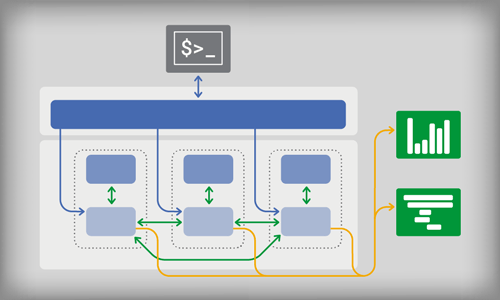
What Is a Service Mesh?
A service mesh is a dedicated infrastructure layer that simplifies service-to-service communication in microservices architectures. It typically uses lightweight network proxies, called sidecars, deployed alongside each service. These proxies handle traffic management, load balancing, service discovery, security, and observability.
Recent innovations, such as Istio’s Ambient Mesh and Cilium, offer alternative deployment models that reduce reliance on sidecars, providing flexible solutions for modern cloud-native architectures.
Essentially, a service mesh acts as an intermediary to ensure seamless communication between services while enabling advanced features that optimize microservices management. For a deeper dive into service mesh concepts, you can explore this detailed service mesh blog.
Advantages of a Service Mesh
Service mesh offers multiple benefits for complex architectures:
- Observability and Monitoring: Provides detailed insights into inter-service traffic and metrics, making troubleshooting easier.
- Traffic Management: Supports intelligent routing, load balancing, canary deployments, and circuit breaking.
- Resilience and Reliability: Handles retries, timeouts, and failures to improve overall system stability.
- Security: Enforces policies, manages encryption, authentication, and authorization, strengthening system security.
- Service Discovery: Simplifies dynamic routing and service interactions in evolving infrastructures.
- Microservices Communication: Abstracts network complexity, standardizing communication across services.
A survey by The New Stack highlighted that security and observability are critical for companies running distributed systems, with 51% citing improved security and 43% enhanced observability as key benefits.
Challenges and Drawbacks
Despite its advantages, adopting has its challenges:
- Increased Complexity: Configuration and maintenance require expertise and resources.
- Performance Overhead: Proxies can introduce latency and impact throughput.
- Operational Burden: Continuous monitoring, scaling, and troubleshooting demand dedicated teams.
- Network Complexity: Debugging and adjustments to existing policies may be needed.
- Compatibility Issues: Integrating with legacy systems, orchestrators, or multiple clouds can be challenging.
- Vendor Lock-In: Some solutions may limit portability across environments.
- Developer Learning Curve: Developers must adapt to service mesh infrastructure, increasing cognitive load.
Addressing these challenges requires careful planning, skilled resources, and ongoing maintenance.
Evaluating Your Use Case
When deciding on a service mesh, consider the following factors:
- Microservices Architecture: Highly beneficial for applications with multiple interacting services.
- Scaling and Performance Needs: Features like circuit breaking, retries, and distributed tracing improve resilience.
- Security and Compliance: Provides mutual TLS authentication and policy enforcement for sensitive workloads.
- Observability: Metrics and tracing simplify monitoring and troubleshooting.
- Complex Networking: Handles service discovery, routing, and traffic splitting across environments.
- Operational Scalability: Centralized control for growing numbers of services and frequent deployments.
- Infrastructure Compatibility: Evaluate integration with existing tools, cloud providers, and monitoring systems.
- Resource Availability: Ensure the team has skills and bandwidth for deployment and maintenance.
Proof-of-concept pilots are highly recommended to test real-world benefits and assess alignment with business requirements.
Scenarios Where Service Mesh Excels
It is particularly useful in:
- Large-scale Microservices: Simplifies management of hundreds of interconnected services.
- Multi-cloud or Hybrid Deployments: Maintains consistent networking, observability, and security.
- Complex Networks: Manages cross-data center or multi-region communication efficiently.
- Compliance-sensitive Environments: Enforces security and provides audit-ready observability.
To choose the right one, tools like the CNCF Landscape Navigator can help identify the best option for your needs.
When a Service Mesh May Not Be Ideal
A service mesh is not always necessary. Consider alternatives if:
- Real-time Analytics Pipelines: Additional proxies can increase latency in high-throughput streaming.
- Legacy Applications: Older monolithic systems may not integrate well.
- Resource-constrained IoT Devices: Limited CPU, memory, or network capacity may be overwhelmed.
Lightweight alternatives include API gateways, service proxies like Envoy, ingress controllers, message brokers like Kafka or RabbitMQ, and custom networking solutions tailored to specific needs.
Do You Need a Service Mesh?
To make the decision:
- Weigh Pros and Cons: Assess benefits against operational complexity.
- Cost-Benefit Analysis: Include infrastructure, learning curve, and potential performance impacts.
- Team Consultation: Gather input from developers, operations, and stakeholders.
- Plan for Scalability: Ensure the mesh can accommodate future growth.
- Assess Existing Infrastructure: Determine whether current solutions meet traffic, security, and observability needs.
- Pilot Projects: Test in a controlled environment before full adoption.
As a result, a careful, informed approach ensures alignment with your organization’s long-term goals and architecture.
ZippyOPS Support for Service Mesh
ZippyOPS provides consulting, implementation, and managed services for modern cloud and microservices environments. Their expertise spans DevOps, DevSecOps, DataOps, Cloud, Automated Ops, AIOps, MLOps, Microservices, Infrastructure, and Security.
They help organizations deploy service mesh solutions efficiently, integrate with existing systems, and maintain optimal performance. Explore their services, solutions, products, or watch demo videos for practical insights.
Conclusion
A Smesh can greatly enhance microservices communication, observability, and security, but it is not a universal solution. Evaluate complexity, performance needs, team capabilities, and alternatives before adoption.
When aligned with your architecture and resources, a service mesh can transform operations and scalability. For expert guidance and support in deploying and managing a service mesh, contact sales@zippyops.com.